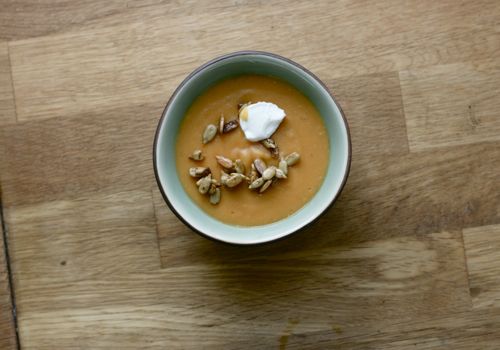
"Tree" by Jane Hirshfield + Roasted Pepper and Lentil Soup

The California coastline is a long stretch of cliffs jutting down to the sea, but depending on exactly where you are in the state, the landscape can be quite different. Southern California is calmer, I think. Lighter blues, softer sand, golden rocks. Palm trees and eucalyptus trees bend over the edge, close enough to feel the mist of the sea. Once you climb north, the sea turns a deeper blue. The water is rockier, the waves rougher, the landscape more rugged and unforgiving. It's beautiful, wherever you are, but Jane Hirshfield, who wrote the poem I'm sharing today, is writing from the north.

Jane Hirshfield is one of my favorite contemporary poets. She is a master of illuminating the quiet places and finding meanings in the simple gestures of our daily life. Her poems are often greatly profound and spiritual, reminding us of connections beyond our physical bodies. I find myself returning to her poems often, never tiring of their beauty and insight.
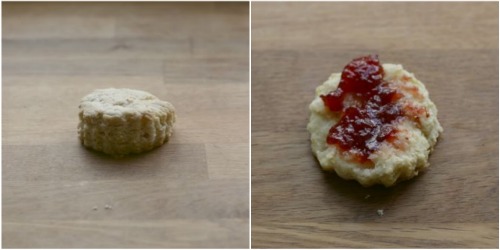
"After Lunch" by Po Chu-i + Simple Scones

Just over a year ago, I visited London again for the first time in eight years. Except for my favorite cafe in Bloomsbury that had closed, the city hadn't changed. There was still soot on the churches, black cabs darting through narrow streets, a hint of gray light as the sun starts to set. This time, no longer on a student's budget, we had afternoon tea at the Dorchester. It had all the pomp and circumstance you'd expect like perfectly tender scones and smoked salmon sandwiches. But what I love most about afternoon tea is the state of mind. There's something about it, isn't there? Pausing from work from 3:30 to 4 pm each day, brewing a dark cup of tea, watching cream swirl in the teacup, taking that first, hot sip. It truly helps you relax and ease into things. It's the perfect time for a mental break, too, when you can let yourself wander, mull over a creative project, or daydream. I so wish we took this ritual more seriously in America, that it was part of our culture so that not having tea would seem, well, uncivilized. A girl can dream.

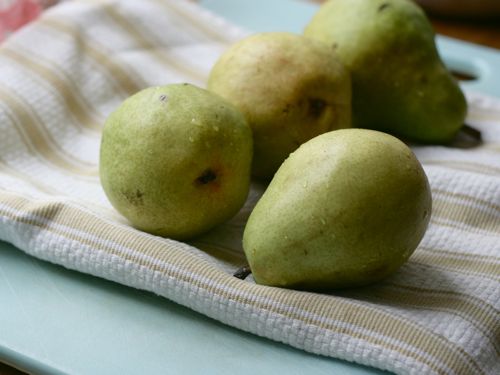
"The Pear" by Jane Kenyon + Vanilla-Scented Pearsauce

Some poems make things simple, recipe-wise. They list a series of ingredients, practically writing the recipe for you, giving your mind a dish before you even finish reading. In this poem, there is none of that. Instead, a single pear, first in the title, then not again until the last stanza, where it's used as a metaphor for the mind in middle age. I hope this is not what I have to look forward to.