I believe the world is beautiful, and that poetry, like bread, is for everyone. —Roque Dalton

FREE Download!

TWITTER
« "After Lunch" by Po Chu-i + Simple Scones | Main | "Baskets" by Louise Gluck + Winter Market Salad »
Wednesday
Jan252012

"The Pear" by Jane Kenyon + Vanilla-Scented Pearsauce

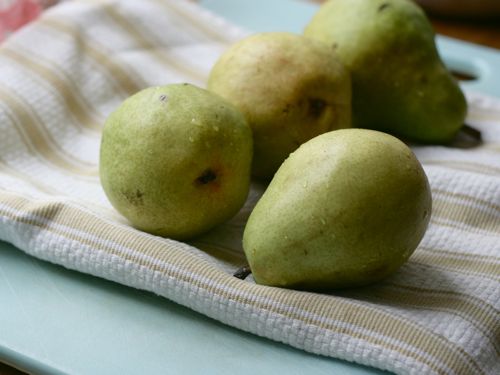
Some poems make things simple, recipe-wise. They list a series of ingredients, practically writing the recipe for you, giving your mind a dish before you even finish reading. In this poem, there is none of that. Instead, a single pear, first in the title, then not again until the last stanza, where it's used as a metaphor for the mind in middle age.

The Pear

By Jane Kenyon

There is a moment in middle age
when you grow bored, angered
by your middling mind, afraid.

That day the sun
burns hot and bright,
making you more desolate.

It happens subtly, as when a pear
spoils from the inside out,
and you may not be aware
until things have gone too far.
 

Certainly, the passage of time is a strong theme. We all have moments (middle-aged or not), when seemingly out of the blue you realize how fast-paced your life is. Sometimes it hits you in the face, like when you receive an invitation for your 10-year high school reunion. More often though, it's subtle, as the speaker suggests, like when you reach for a pear in the bowl on the counter and realize it has spoiled. That the month is nearly over, another year gone by.

It sounds as if the speaker needs a bit of a boost. Someone to say, "it's fine, really." And I can think of nothing better than a cup of tea, a scone, and homemade jam to soothe the soul and make the world a bit more manageable.
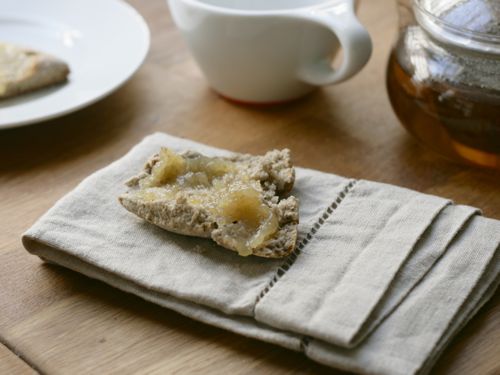
VANILLA-SCENTED PEARSAUCE

When viciously pureed, the pears take on the consistency of applesauce. Whether or not you peel the pears is up to you; I gave them a rough peel, just to get most of the skin off. Also, if you prefer your sauce slightly less sweet, reduce the amount of sugar.

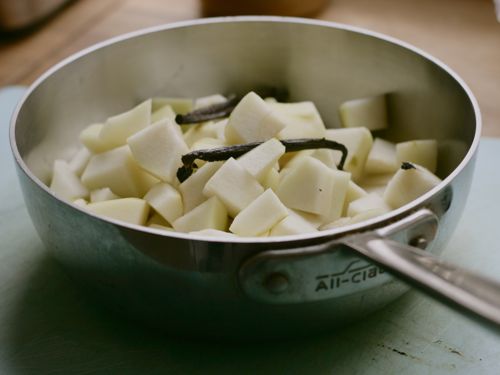
4 pears, peeled and chopped
1 vanilla bean
3/4 cup sugar

In a 3-quart saucepan, add the pears and sugar. Scrape the vanilla bean seeds out of their pod, then add them to the pan. Toss in the pod as well.

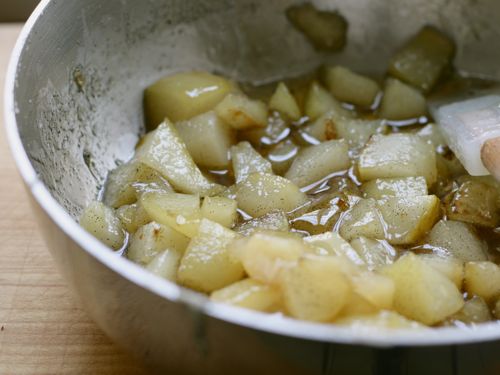
Heat over a medium-low flame for about 15 minutes, or until the pears are soft and masheble with the back of a spoon.

Remove the vanilla pod and transfer jam to a food processor; pulse until desired consistency is reached. Keep refrigerated, and spread on scones or toast.

PrintView Printer Friendly Version

EmailEmail Article to Friend

Reader Comments (5)

I'm not familiar with Jane Kenyon, and when I looked her up on Famous Poets and Poems.com I found she didn't even live to see 50 (having died of leukemia). Her choice of the word "bored" is poignant to me. The bio said she wrote often about her own depression. The pear sauce is a good way to use very ripe pears, I would think, which seems appropriate here.

01.27.2012 | Unregistered Commenterla domestique

This is an interesting poem. After reading it a few times I came up with this response: Can a mother forget her nursing child, that she should not have compassion on her child? Yes, she may forget, yet I will not forget thee. See, I have engraved you upon the palms of my hands, your walls of protection are always before me. Isaiah 49:15-16. No matter what my age, God will never forsake me and His blessings will never end. We are never too old to be a blessing to others. Let's keep our eyes on the Lord Jesus and not our circumstances, He has a great plan for our lives no matter what our age.

I always feel graced when someone expresses genuine feelings. Poetry is so helpful in that respect.The honesty of Kenyon's expression of disappointment allows the reader to acknowledge disappointment, a part of everyone's feelings. The problem I see her dealing with is the fear of indulging those feelings until there is interior "spoilage"---a kind of cautionary tale. Then I thought of the pear as a symbol. For the Chinese it is a symbol of immortality, for the Koreans a symbol of grace and nobility, sometimes fertility. In the west it was used as a symbol of sexuality ---"and a partridge in a pear tree." It represented affection and a "pair" bonding. Each of these symbols provides an addition interpretation when read into Kenyon's poem. This is why I love poetry so much.

On another subject. I am so happy about your new "brand." When a good idea comes along, it seems so obvious---"Why didn't I think about that?! Congratulations! A brilliant idea. In a world turning to simpler and simpler explanations of life, it is good to wrestle with literature and poetry. They give us a depth of meaning that disturbs, comforts, enlightens. These qualities lead us to a more engaged and compassionate stance in the face of continuing contradictions, irony and struggles. Thank you so much for taking this step; for you, and for us.

01.28.2012 | Unregistered Commenterjanjamm

I would "virtuously" puree the pears. I think they might like that better.

02.1.2012 | Unregistered CommenterKeritha

@Keritha: Yes, I believe they would!

02.1.2012 | Registered CommenterNicole

PostPost a New Comment

Enter your information below to add a new comment.

My response is on my own website »
Author Email (optional):
Author URL (optional):
Post:
 
Some HTML allowed: <a href="" title=""> <abbr title=""> <acronym title=""> <b> <blockquote cite=""> <code> <em> <i> <strike> <strong>